

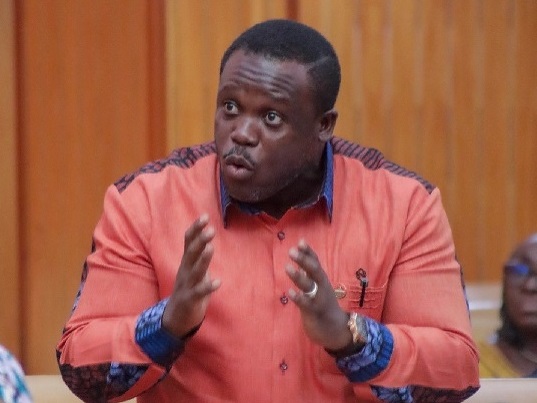
The Minister for Communication, Digital Technology and Innovations, Sam George, has voiced serious concerns over what he describes as repeated compromises of sensitive security operations during the tenure of the previous administration, alleging that confidential information was routinely leaked to individuals suspected of engaging in cybercrime.
According to the Minister, these alleged breaches significantly weakened state efforts to sanitise Ghana’s digital ecosystem and damaged the country’s credibility in the eyes of international partners working to combat online fraud.
Mr. George made the remarks during a media interview that has since attracted widespread attention and discussion across social media platforms. In the interview, the minister suggested that past attempts to clamp down on cybercriminal activities were frequently sabotaged due to advance warnings allegedly passed on to targets before law enforcement operations could be executed.
He explained that several coordinated enforcement actions failed to yield results because suspects were reportedly tipped off ahead of time, allowing them to evade arrest and destroy evidence. According to him, this pattern not only undermined domestic law enforcement but also strained Ghana’s collaboration with international security agencies.
Addressing claims surrounding recent cooperation with foreign law enforcement bodies, the Minister clarified that requests involving international partners, including the United States Federal Bureau of Investigation (FBI), were not initiated under the current government.
“Those requests were not made today. They were already in place long before I assumed office,” Mr. George stated, stressing that investigations into cyber fraud and related digital crimes had been ongoing well before his appointment as Minister.
He emphasised that the current administration inherited several unresolved cases and intelligence reports, some of which had stalled due to internal lapses and alleged interference within state institutions.
The Minister further noted that restoring trust in Ghana’s digital governance framework requires not only technological reforms but also strict accountability within public institutions. He warned that any individuals found to have compromised national security operations, regardless of their political affiliation, would be dealt with according to the law.
Mr. George reiterated the government’s commitment to rebuilding international confidence in Ghana’s digital space, stating that effective cybersecurity enforcement is critical to attracting investment, protecting citizens, and strengthening the country’s global reputation.
He added that his Ministry is working closely with security agencies and international partners to ensure that future cybercrime operations are conducted with greater confidentiality, professionalism, and institutional discipline.
The comments have since sparked renewed public debate about governance, accountability, and the role of public officials in safeguarding national security interests. Analysts say the revelations highlight long-standing concerns about internal leaks and underscore the need for systemic reforms to protect sensitive state operations.
As Ghana continues its efforts to position itself as a secure digital hub in the region, observers note that addressing internal vulnerabilities may prove just as important as confronting cybercriminals themselves.

